Why a Cool Pantry Keeps Apples Different from a Sunny Shelf
Cool pantry apple storage slows softening and helps fruit keep its firmness, using a shaded, steady spot and simple checks instead of elaborate equipment.
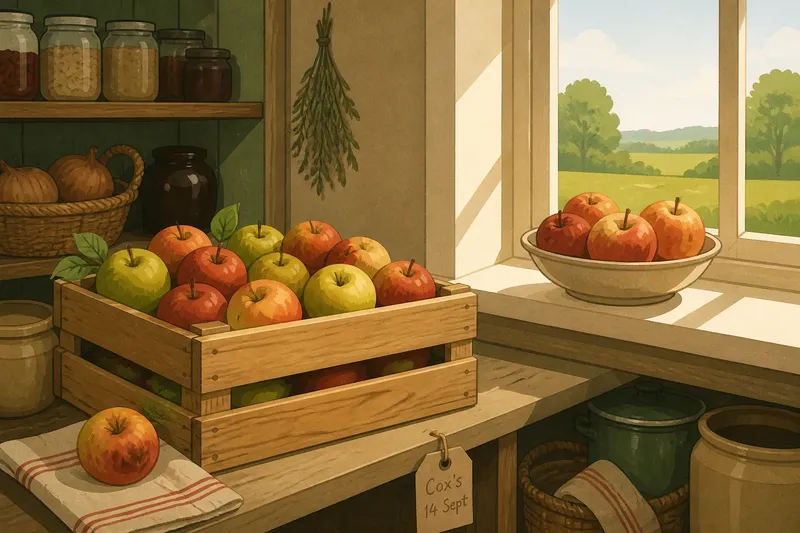
A bowl of apples on a sunny windowsill can turn from crisp to yielding while a plain box in a cool pantry keeps the fruit firmer. Cool pantry apple storage works because lower, steadier temperatures slow the changes that soften apples; keeping them out of direct sun prevents needless warming and temperature swings.
You do not need a purpose-built cellar to make a useful storage spot. Start by choosing a cool place away from sunlight and heat, then sort the fruit, arrange it so you can inspect it, and check it periodically. The aim is not to make apples last indefinitely, but to give sound fruit a calmer place to keep its texture.
Choose the coolest steady place you already have
Look first at a pantry, unheated cupboard, enclosed porch or cool room that stays shaded through the day. A useful spot feels consistently cool rather than chilly for a moment and warm again later. Avoid a shelf beside an oven, radiator, boiler, hot water pipe or frequently opened exterior door.
Direct sun is a particular nuisance because it warms the fruit and the surface beneath it, then leaves both to cool when the light moves. That repeated warming and cooling can hasten softening. A shaded shelf is therefore more useful than an elaborate container placed in a bright, warm room.
If you have a household thermometer, use it to compare possible locations rather than chasing a single ideal reading. Check at different times of day, especially in the place that receives afternoon light. The best choice is the spot with the steadiest cool conditions that you can reach without shifting the apples around constantly.
A pantry is a little like a shaded bench: it does not create cold, but it keeps the fruit out of the sun’s direct heat. If every indoor space is warm, choose the coolest dark cupboard available and plan to use the apples sooner. A refrigerator can be an option for a small amount, provided the fruit can be kept separate from foods that readily take on its aroma.
Sort the apples before putting them away
Handle the fruit gently and look over each apple in good light. Set aside any with a split, bruised patch, puncture or soft spot. These are better eaten soon or used in cooking; a damaged apple is less suited to storage alongside sound ones.
Keep varieties separate if you know their names, and note which ones are intended for early use. Different varieties do not all hold their texture in the same way, so treat the fruit as a mixed harvest rather than assuming every apple will keep equally well. If you do not know the variety, the fruit’s condition and regular inspection matter more than guessing.
Do not wash apples before storage. Extra moisture on the skin can encourage spoilage, and washing can wait until you are ready to eat or cook them. If the fruit is dusty, brush it lightly with a clean, dry cloth instead.
Imagine you have brought home a small basket from a rural market, with several firm apples and one bruised one. You set the bruised apple aside for that evening’s crumble, leave the clean, sound fruit unwashed, and put the firmest ones in a shaded pantry box. The visible result to look for is simple: the damaged fruit gets used first, while the others remain easy to inspect and less likely to be disturbed.
Arrange fruit so air can move and checks stay easy
Choose a clean, dry box or tray that is sturdy enough to support the apples without crushing them. A slatted wooden crate allows air to circulate, but a shallow cardboard box can also work if it is dry and the fruit is not packed tightly. Avoid sealed plastic bags, which can trap moisture around the skins.
Lay apples in a single layer when space allows, leaving a little room between them. If you need to stack them, use shallow layers and place a clean sheet of paper or corrugated card between each one. The separator makes it easier to lift and inspect the upper layer without scraping the fruit below.
Arrange the box where you can see it, not at the back of a crowded cupboard. If you are storing several varieties or groups, label the box with the variety if known and the date you brought the fruit home. That note is a prompt for rotation, not a promise about how long the apples will keep.
Do not wrap every apple in elaborate layers unless you have a clear reason and enough time to keep the wrapping dry. For a modest household supply, clean spacing and easy access make more difference to everyday care. A container should protect the fruit from bumps while leaving you able to notice a change.
Keep the storage conditions calm
Once the box is in place, resist moving it between warm and cold spots. Repeated changes can warm the fruit and may leave moisture on its surface. Store it away from direct sunlight, cooking heat and appliances that release warmth as they run.
Keep apples apart from strong-smelling foods such as onions, and avoid putting them beside produce that is easily affected by the aroma apples give off. A separate shelf or box helps prevent flavour transfer and makes it easier to keep the apples dry and visible. Do not place the box directly on a damp floor or against a wall that feels wet.
Some pantries are also used for jars, potatoes or other household stores. Give apples their own clean space rather than wedging them among supplies that may be damp, dusty or difficult to move. The useful arrangement is the one that lets you reach the fruit without knocking it about.
Inspect the fruit and use it in a sensible order
Look over stored apples regularly, but handle them gently and avoid unnecessary rearranging. Check for new bruises, shrivelling, mould or a patch that has begun to soften. Remove any apple that is deteriorating and use sound fruit first if its texture is beginning to change.
Use the firmest apples for eating fresh when they still have the crisp bite you prefer. Fruit that is sound but less crisp can go into a pie, sauce or baked dish, where a slight loss of crunch matters less. Discard fruit with mould or extensive decay rather than cutting around a questionable area.
When you remove an apple, check the one that was touching it and the surface beneath it. Clear away any damp paper or spoiled material, then return the remaining fruit without compressing it. This small habit catches trouble early and keeps the box straightforward to manage.
If the pantry grows warm as the season changes, adjust your plan rather than trying to compensate with complicated equipment. Move only the remaining sound fruit to a cooler shaded place if one is available, or use it sooner. Keep a small amount on hand and replenish it as needed instead of letting a large box sit through changing conditions.
Which storage questions matter most?
Can apples be kept in a refrigerator?
Yes, a refrigerator can suit a small supply when pantry conditions are too warm, though it may take up space and the fruit can pick up nearby aromas. Keep apples in a breathable container or drawer and separate them from foods whose flavour you want to protect.
Should apples be stored in the dark?
Darkness is useful because it removes direct sunlight and helps avoid warming the fruit. A shaded cupboard is enough; the important point is that the storage place remains cool and does not sit beside a heat source.
Can apples and potatoes share a pantry?
They can occupy the same room, but keep them in separate containers and give each a dry, accessible spot. Separate storage limits unwanted smells and makes it easier to inspect each crop on its own terms.
What should I do with a soft apple?
If it is sound apart from a small bruise or slight softening, use it promptly in cooking after checking it carefully. If you see mould, extensive decay or an unpleasant smell, discard it rather than storing it with the rest.
Let the pantry do the simple work
For cool pantry apple storage, the sequence is modest: find a shaded, steady place; remove damaged fruit; arrange the rest in a clean, breathable container; and inspect it as you use it. A costly rack cannot rescue apples left in direct sun, while a plain box in a suitable spot can make daily storage easier.
Keep the amount you store within reach of your household’s appetite, and let the fruit’s condition guide what you eat next. A firm apple is best enjoyed crisp; a sound one that has softened can still have a place in the kitchen. The pantry earns its keep by preserving that choice for longer, without asking you to turn storage into a project.