Basket, Box or Paper Bag: Carrying Greens Home
Basket, box or paper bag for carrying greens home? Choose a container that limits pressure, keeps leaves from shifting and suits your market trip.
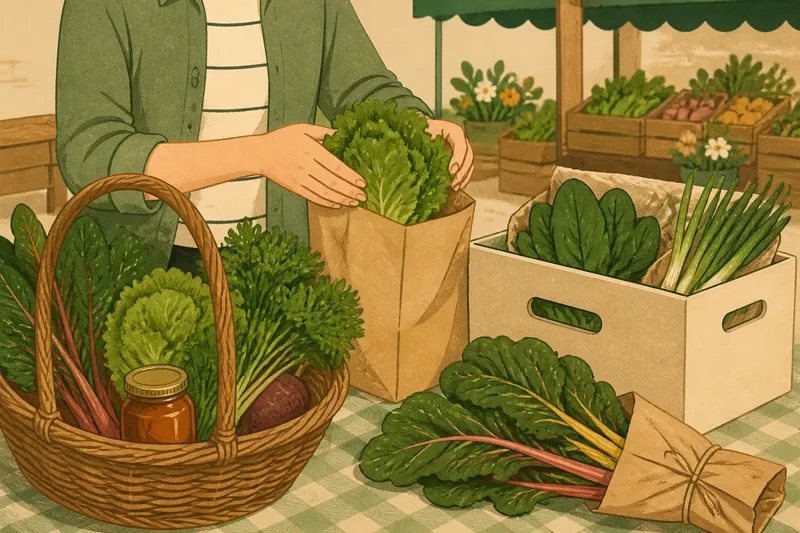
Basket, box or paper bag choices can decide whether market greens arrive crisp-looking or flattened at the bottom of the load. The usual culprit is not the leaves themselves but pressure from other shopping, a container that lets them slide, or a damp bundle sealed without room to breathe.
Think of a head of lettuce like a soft loaf: it needs a firm place to sit, not a heavy item resting on top. Match the carrier to the greens, the length of the journey and the rest of your market haul, then tackle any damage by tracing how it happened.
Leaves arrive crushed because the load presses down
Delicate lettuce, spinach and tender herbs bruise easily when heavier purchases ride above them. A roomy basket can still fail if a jar, squash or bag of potatoes tips against the greens on the walk home.
Try giving the leaves a top position. Put sturdy goods at the base of the basket or box, then lay the greens across them without forcing the stems into a tight corner. If your route includes a crowded bus or a bicycle basket, carry the greens separately in a paper bag or small box rather than wedging them beneath other parcels.
A rigid box is useful when it has a broad, flat base and enough height for leaves to sit loosely. It shields them from knocks and keeps the shape of the load predictable, but a box crammed full can press its contents together just as firmly as a packed basket.
Greens shift around because the container is too large
A large basket may feel convenient at the stall, then let a small bunch of chard slide from side to side on the way home. The movement can crease broad leaves and bend tender stems, especially when the carrier swings with each step.
Choose a smaller basket or box when you are buying only a few bunches. For a larger harvest, use a clean cloth or a separate paper bag as a loose divider; avoid packing the leaves so tightly that their own weight compresses them.
Imagine you have bought one bunch of parsley and a small lettuce, with a jar of honey already in your basket. Put the jar at the base, place the lettuce in a paper bag beside it, and rest the parsley on top with its stems turned towards a clear edge. The expected result is that the greens stay in place without the jar leaning on their leaves.
Paper bags collapse when the contents are damp
Paper is light, easy to fold around a bunch and often the simplest option for a short walk. But a wet bag can soften at its base or tear at the handles, leaving leaves exposed to pressure and dirt.
Check the outside of the greens before accepting or packing them. If they are visibly wet from rinsing or rain, ask the seller for a dry wrap, or place the paper bag inside a clean, open-topped box for support. Keep the bag upright and do not set a damp bundle beneath heavier shopping.
Paper also offers less protection from sharp edges and rough handling than a rigid carrier. It suits a small, lightly packed purchase; it is less suitable as the only support for several bunches on a long, busy journey.
Leaves wilt because the carrier traps warmth and moisture
A tightly closed plastic-lined box can hold moisture against freshly cut leaves, while a basket allows air to circulate but leaves the produce more exposed to sun and wind. Neither extreme suits every trip: warm conditions can leave greens looking limp, and wet leaves pressed together may become clammy.
Use a breathable basket or an open box when the greens are dry and the journey is straightforward. If rain or splashes are likely, use a paper bag inside a box or cover the top loosely, leaving the sides open. Keep the carrier out of direct sun and away from warm car interiors where practical.
Do not rinse market greens before carrying them unless there is a particular need. If they are already damp, avoid sealing them into an airtight container. For specific produce, follow any handling advice supplied by the grower or seller.
The wrong carrier makes awkward bunches bend
Long spring onions, beet leaves and substantial chard stems can protrude from a shallow basket or fold over inside a short paper bag. That bend often begins at the point where the bunch catches on the rim, not from the distance travelled.
Before leaving the stall, check that the longest stems fit without sharp folds. A tall rigid box can protect upright bunches; a deep basket works if the leaves are supported and not snagged on the handle. For a long bunch, ask for a paper wrap around the stems, then keep the leafy ends clear of other items.
If the carrier has a narrow opening, do not push a broad bunch through by force. Reposition the leaves or use a second container. A small adjustment at the market is easier than carrying a bent bundle all the way home.
Which carrier suits the trip?
Choose by the main risk in your journey: pressure, movement, dampness or awkward shape. A basket breathes and is easy to load, a rigid box gives dependable support, and a paper bag keeps a small purchase light and separate.
- Choose a basket for dry greens and a short trip when you can keep heavy goods below them.
- Choose a rigid box for delicate leaves, a crowded route or a load that needs a flat base.
- Choose a paper bag for a small bunch that can travel upright and away from heavier items.
- Combine carriers when one container cannot do both jobs: a paper bag can separate greens inside a box, while an open box can support a soft bag.
- Rearrange the load if stems bend, leaves shift or a heavy purchase begins to lean against them.
Wash reusable baskets and boxes when needed and let them dry before use. A clean carrier is easier to inspect, and dry surfaces are less likely to leave paper weakened or leaves pressed against damp material.
What should you use for delicate salad leaves?
A small rigid box is often the most protective choice if it has room for the leaves to sit loosely. An open paper bag can work for a brief, gentle trip, provided it stays upright and is not squeezed beneath other purchases.
Can greens travel in a closed box?
A closed box protects against bumps, but trapped moisture and warmth may make leaves clammy. Keep the top open or use a loose cover when conditions allow, and avoid placing wet greens in an airtight container.
Should you put greens at the bottom of a basket?
Usually not if the basket will also hold heavy jars, roots or fruit. Put sturdy goods below and give the greens a stable, clear place above them, where the leaves are not pinched by the handle.
How can you carry several kinds of greens together?
Separate delicate leaves from firm bunches with a paper bag or clean, dry cloth, and keep long stems from folding across softer leaves. Arrange the heavier bunches low and avoid packing the carrier so tightly that the greens press against one another.
For carrying greens home, the best carrier is the one that addresses the trouble your trip is likely to create. Set the leaves down when you arrive, remove any damp wrapping and put them away according to the seller’s handling advice; a careful journey begins with a container that keeps weight off the leaves.