The Myth of the Exact Harvest Date
The exact harvest date is only a rough guide. Learn to read colour, firmness, size and other crop-specific signs before picking garden produce.
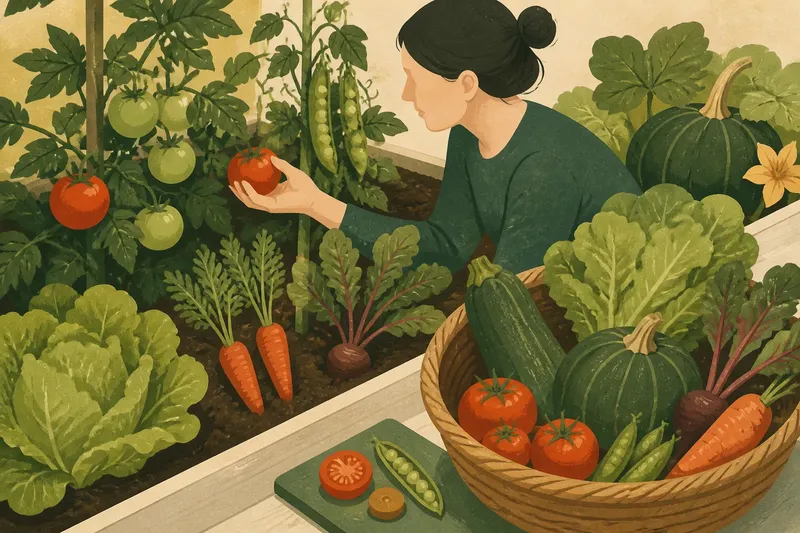
The exact harvest date is a poor judge of readiness: a courgette can swell quickly after rain, while a tomato on the same plant may still be hard and green. Treat the date on a seed packet or calendar as a prompt to look closely, then let the crop’s visible changes decide whether it belongs in your basket.
That shift matters in a kitchen garden, where sowing dates, soil, aspect and weather vary from bed to bed. A calendar offers a broad window; the fruit, root, leaf or pod tells you what is happening in your own plot. Read the signs that suit the crop, and you can harvest for the texture and flavour you actually want.
Use the date to begin looking, not to make the decision
Seed packets describe an expected growing period under conditions that may not match your garden. A cool spell can slow development; a sheltered, sunny bed can move it along. Even two rows of the same crop may differ if one sits in shade or drains more slowly.
Keep the packet’s timing as a reminder to inspect, not a deadline. If it suggests that harvesting may be approaching, visit the plants and look for the crop’s specific cues. A date can help you remember to check; it cannot show whether a beetroot has filled out or a bean pod has become firm.
Think of the calendar as a kitchen timer that tells you when to look at the oven, not as a window into the cake. The timer is useful, but the visible result still matters. In the garden, that result is the crop’s colour, shape, firmness, size or ease of picking.
Choose cues that match what you plan to eat
“Ready” does not always mean the same thing. A gardener picking salad leaves for a tender bowl may want them young, while someone growing a pumpkin for winter storage wants a mature fruit with a toughened skin. Before assessing a plant, decide whether you want tenderness, sweetness, full flavour or a crop that can be stored.
- For tender leaves: Pick outer lettuce leaves while they are supple and before the plant begins to send up a flower stalk. If the leaves have become coarse or bitter, they may have passed the stage you wanted.
- For juicy fruit: Check tomatoes for a colour change across the skin and a slight give when handled gently. A tomato that remains uniformly green and feels very firm is not showing the same ripeness cues as one colouring towards its variety’s mature shade.
- For crisp pods: Look for broad beans or peas that have filled their pods, then feel for the shape of the seeds through the shell. Harvest young if you prefer a tender bite; allow more filling if you want plumper seeds.
- For roots: Brush soil from the shoulder of a carrot or beetroot and judge its visible girth against the size you like to cook. A root can be edible before it reaches the largest size shown in a catalogue.
- For storage crops: Watch for signs of maturity rather than judging by bulk alone. A winter squash with a firm rind and a stem beginning to dry is at a different stage from a fruit whose skin still marks easily.
These are clues, not promises. Varieties differ, and a cue that works for one kind of tomato or squash may not describe another. Where the crop’s identity matters, check the seed packet or the grower’s description, then observe how that particular variety changes.
Sort the decision by what you can see
Use the situation in front of you to choose your next move. The same calendar date can lead to different decisions across a kitchen garden, because each crop is judged by a different part of its development.
If the crop has changed colour
Colour change can signal ripening in tomatoes, peppers and some fruiting crops, but look for the shade associated with the variety rather than assuming everything should turn red. A striped tomato, for example, may be mature with green markings still visible. Check whether the colour has deepened and whether the fruit gives slightly to a gentle touch.
If the colour is still changing, leave the fruit attached and inspect again soon. If it has reached its mature shade and feels less rigid, try picking one. Its texture and taste can help you decide whether the rest should be harvested at a similar stage.
If the crop has filled out but still looks young
Pods and many roots are best judged by shape and fullness, not by a dramatic colour change. A pea pod that is flat and narrow may need more time if you want developed peas; a pod that feels well filled may be ready to pick. For a carrot, expose just enough of the shoulder to assess its size without pulling the whole row.
If a plant is producing a steady supply, take a small sample and cook it as you intend to serve it. A young pod may suit quick cooking, while a fuller one may be better shelled. If the sample has the texture you want, harvest more; if it is still underdeveloped, give the remaining crop more time.
If the plant is flowering, bolting or setting seed
Flowering changes the harvest decision for leafy crops such as lettuce and some herbs. As a plant sends up a flower stalk, its leaves can become tougher or more bitter. If tender leaves are the goal, pick usable foliage before the stalk rises far; if you want seed, allow the flowers to develop instead.
Do not assume that a flower means every part of the plant is useless. Check the leaves and stems you intend to eat, and decide whether their texture still suits your kitchen. The choice is between the crop’s current eating quality and the next stage of its growth.
If the crop looks mature but the weather is turning
When ripe fruit is vulnerable to splitting or a run of damp weather is expected, the practical choice may be to pick slightly earlier and let it finish ripening indoors, if that crop is suited to doing so. Tomatoes are often picked as they begin to colour and brought inside to continue ripening. This is not a good substitute for maturity cues in every crop, so consider the plant and the intended use.
For crops meant to store, inspect the whole plant rather than responding to a date alone. If a squash’s skin is still easily marked, it may need more time to mature; if the fruit looks ready but prolonged wet conditions threaten its condition, seek crop-specific advice before deciding. Storage plans depend on the variety and handling requirements.
What should you do when the signs disagree?
Should you pick a sample first?
Yes, when one fruit, pod or root can be removed without harming the rest of the crop. Taste or cook that sample in the way you expect to use the harvest, then compare its texture and flavour with what you want. One sample is a useful guide to the plant in front of you, not a verdict on every plant in the bed.
Can you judge a crop by size alone?
Size is one clue, but it is not enough by itself. A small courgette may be tender and ready for the table, while a larger one may have developed a firmer interior and larger seeds. Use size alongside colour, firmness and the eating quality you are aiming for.
What if only part of the crop looks ready?
Harvest selectively rather than waiting for the whole bed to match. Pick the tomatoes that have coloured, leave the firm green ones attached, and return to inspect them later. The same approach suits crops that mature unevenly along a row or across a plant.
How often should you check a crop near harvest?
Check more often as visible changes begin, especially for crops that grow quickly or become coarse if left too long. A brief look at pods, salad leaves and courgettes can prevent a ready crop from being overlooked. Set the rhythm according to how fast the plants are changing, not by a fixed calendar interval.
Make the harvest decision crop by crop
Say you sow a row of beetroot on the same day and note the date on a garden label. When the roots begin to show at the soil surface, you brush soil from one shoulder and find a beetroot that suits the size you prefer. You pull that one for supper, leave the smaller shoulders in place, and check the row again as the next roots fill out.
That small decision uses the label for memory and the plant for evidence. It also avoids treating every root as though it grew at the same pace. A simple garden note can record what you saw—such as a change in colour, fuller pods or a tender sample—so next season’s timing becomes more useful without pretending the date is exact.
When a seed packet’s expected window arrives, let it send you back to the bed. Look at the part you plan to eat, choose the stage that suits your cooking, and pick selectively where the crop is uneven. The exact harvest date matters less than noticing what the plant is showing you now.