A Late-Summer Table Built Around One Basket of Tomatoes
Plan a late-summer meal around one basket of tomatoes, with flexible pairings, simple dishes and room for whatever the market or garden offers.
A late-summer meal can begin with one basket of tomatoes and a decision about how to serve them: raw, warmed, or both. Planning a late-summer table around tomatoes works best when the fruit sets the meal’s direction, while bread, herbs, cheese and other seasonal arrivals remain flexible.
That approach suits a kitchen garden as well as a rural market. Instead of building a menu around a fixed recipe, notice what the tomatoes are like, then choose a few supporting dishes that make their flavour and texture easy to enjoy.
Sort the tomatoes by how they want to be eaten
Spread the basket across a clean cloth and look for differences. Small, firm tomatoes are easy to halve for a salad; larger, very ripe ones may be juicier and better sliced over a platter or crushed into a rough dressing. The point is not to assign every variety a strict role, but to spot what needs using first.
Set aside any fruit with bruised or split patches. Trim sound portions for immediate use, and keep damaged tomatoes apart from those you intend to serve whole. A gentle rinse just before preparation helps avoid leaving wet fruit on the table, where it can dilute a salad or soften bread.
Think of the basket as a small group of ingredients rather than a single uniform pile: one tomato might be the bright, juicy centrepiece, while another becomes the seasoning in a dressing. Like choosing books from a shelf, each one can serve a slightly different purpose without changing the theme.
Build the menu around one tomato dish
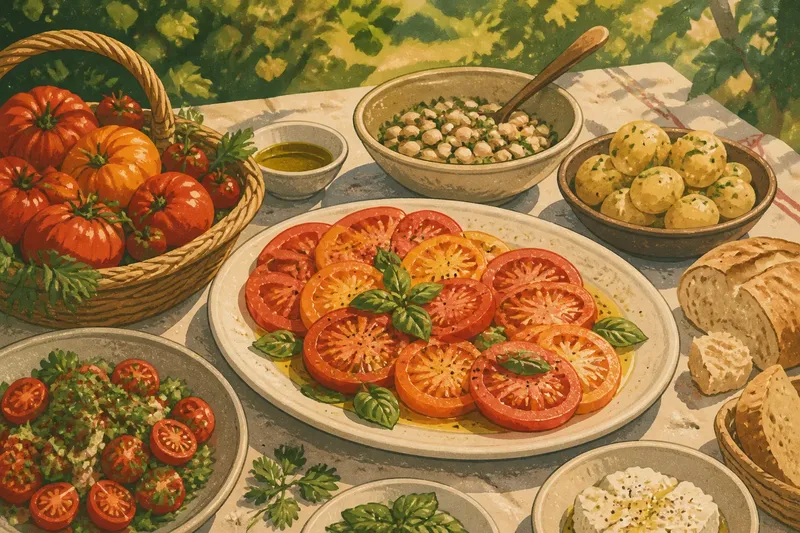
Choose a single dish to carry the meal’s main tomato flavour. A platter of sliced tomatoes with salt, olive oil and torn basil is generous and uncomplicated. For a more substantial centre, layer tomatoes with soft cheese, or serve them alongside beans dressed with vinegar and chopped herbs.
Keep the other dishes modest. A bowl of boiled potatoes, a plate of bread, or a dish of cooked beans gives guests something to eat alongside the tomatoes without competing with them. If the basket contains a mix of ripe and firmer fruit, use the ripest in the main dish and leave the firmer ones for a crunchy salad.
Say you have a basket with several very soft tomatoes, a handful of small firm ones, and a bunch of parsley from the garden. You could slice the soft fruit onto a platter, stir some of its juice into an olive-oil dressing, and halve the firmer ones for a parsley salad; the meal then has a juicy centre and a fresher side without requiring more tomatoes than you already have.
Let the supporting ingredients follow the season
Choose one or two extras from what is actually available. In a garden, that might mean basil, parsley, cucumbers, courgettes or green beans. At a market, look for a small bunch of herbs, a loaf from a local baker, or a cheese that can be served without elaborate preparation.
Fresh herbs are useful in different ways. Tear tender basil over sliced tomatoes just before serving; chop parsley into a bean dish; or add mint to cucumber if the meal needs a cooler, crisp note. If herbs are scarce, a little finely sliced spring onion or a spoonful of capers can give a dressing more character.
Consider texture as well as flavour. Tomatoes are soft and juicy, so a crisp cucumber salad, toasted bread or boiled potatoes with their skins on can give the meal contrast. A sharp vinegar, lemon juice or pickled onion can lift rich cheese, but use only one pronounced sour element at first; it is easy to add more after tasting.
What can replace the planned side?
What should I serve if there is no fresh basil?
Use another soft herb, such as parsley or chives, or leave the tomatoes plain and season them carefully. A little black pepper or finely sliced onion can add interest without pretending to be basil.
What goes with tomatoes when the market has few vegetables?
Make bread or boiled potatoes the supporting dish, then add beans, cheese or eggs if they are available. The tomatoes can still anchor the meal; a menu does not need a large assortment of produce.
Can I serve tomatoes with cooked food?
Yes. Pair a raw tomato platter with a warm dish of beans, potatoes or courgettes, or briefly warm some tomatoes in a pan with oil and herbs. Keep one part of the meal cool and fresh if the rest is hearty.
Balance cool, warm and substantial dishes
A casual table feels more complete when it offers a choice of temperatures and textures. A raw tomato platter alongside warm beans or potatoes provides that difference with little extra preparation. If the weather is warm, serve the hot dish at room temperature rather than trying to keep everything piping hot.
For a heartier meal, add eggs, cheese or beans. Boiled eggs can be halved and arranged beside the tomatoes; a bowl of butter beans can take olive oil, vinegar and chopped herbs. These additions are adaptable, and each can be served on its own so guests can take what suits them.
Use bread to make the tomato juices part of the meal. Put slices in a basket rather than under the tomatoes, where they can turn soggy before anyone sits down. A small dish of olive oil or softened butter gives the bread its own place at the table.
Prepare the components without rushing the ripe fruit
Do the jobs that do not depend on delicate texture first. Cook potatoes or beans, wash herbs, set out plates, and mix a dressing. Slice the tomatoes closer to serving time, especially if they are very ripe; prolonged contact with salt draws out juice and can leave a platter watery.
Season in stages. Add salt to the tomatoes shortly before they reach the table, then taste the dressing and adjust its acidity. If the tomatoes are especially sweet, vinegar can provide balance; if they are already lively and tart, use less and let the olive oil soften the edges.
Keep the serving pieces plain. A wide plate gives sliced tomatoes room to lie in a single layer, while a shallow bowl suits chopped tomatoes and their juices. Put a spoon beside a juicy salad so the dressing can be shared rather than left at the bottom.
Leave a little room for the next harvest
Do not feel obliged to use every seasonal ingredient in one meal. If a neighbour offers cucumbers or the market has a small basket of plums, choose only what fits comfortably alongside the tomatoes. One additional salad or a simple piece of fruit for after the meal is often enough.
Save any sound tomatoes that are not needed for the table for another meal, rather than cutting them all in advance. Store ripe fruit at room temperature away from direct sun, and use the most fragile ones first. Follow any particular handling advice supplied by a grower or seller when it differs from general kitchen practice.
A late-summer table built around one basket of tomatoes does not need an exact menu. Start with the ripest fruit, choose one main tomato dish, and let the rest of the meal respond to the garden or market in front of you. That is the useful promise of the basket: a clear centre for supper, with enough room for the season to change its mind.